As an Amazon Associate, I earn commission from qualifying purchases.
With some stunning coastal views, cute rural villages, and a scenic river crossing, walking from Esposende to Viana do Castelo is a real joy.
For me personally, this is the moment when the Portuguese Coastal Way really comes into its own as a pilgrimage. Today’s stage sees the first examples of pilgrim culture with plenty of stone crosses and scallop shells left behind by other pilgrims, and you’ll even encounter a fun pop-up pilgrim convenience store!
With charming local parish churches (and stamps!), beautiful views of the Atlantic Ocean, and a super cute coastal town at the end of the day, this is one of my favorite stages.
Save it for later! ↓

Quick links:
- Coastal Route Overview
- Yesterday’s stage: Vila do Conde to Esposende
- Tomorrow’s stage: Viana do Castelo to Caminha
Esposende To Viana Do Castelo (Coastal) Overview
Experience Today’s Walk
☑ See the oldest inscription in Portugal that mentions Saint James
☑ Taste a glass of port at Café Lampião in Belinho
☑ Hear the murmur of the River Neiva as you walk through the forest
☑ Touch the ancient stone crosses that have guided pilgrims through the ages
☑ Smell the Eucalyptus trees in the morning
When you start the Camino de Santiago, it takes a few days to catch the rhythm of the walk. Likewise, no matter which route you take on the Camino Portugues, Coastal Route, or Central Route, it takes a while to fully escape the Porto bubble.
Today’s stage marks a bit of a turning point for many pilgrims. As you make your way closer and closer to Santiago de Compostela, you feel the landscape slowly change. After you leave Esposende on familiar quiet streets and backcountry roads, you’ll encounter your first bits of elevation as well as some real forests today.
The history of the pilgrimage becomes a little more visible on this stage. You will see several churches or shrines dedicated to St James. Likewise, the observant pilgrim will find themselves walking on streets such as Rua de São João or the Travessa de Santiago bearing his name.
As you’re walking, you’re getting closer and closer to the sacred heartland, where the influence of the apostle is felt all around you.

Monument with hiking shoes along the Camino Portugués 
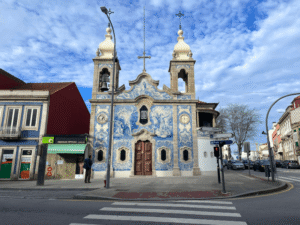
Church on the Coastal Route of the Camino Portuguese 
Interior of Lampião Caffé in Belinho along the Coastal Route of the Portuguese Camino 
A pilgrim passport with a stamp from the Capela de Santo Amaro in Belinho 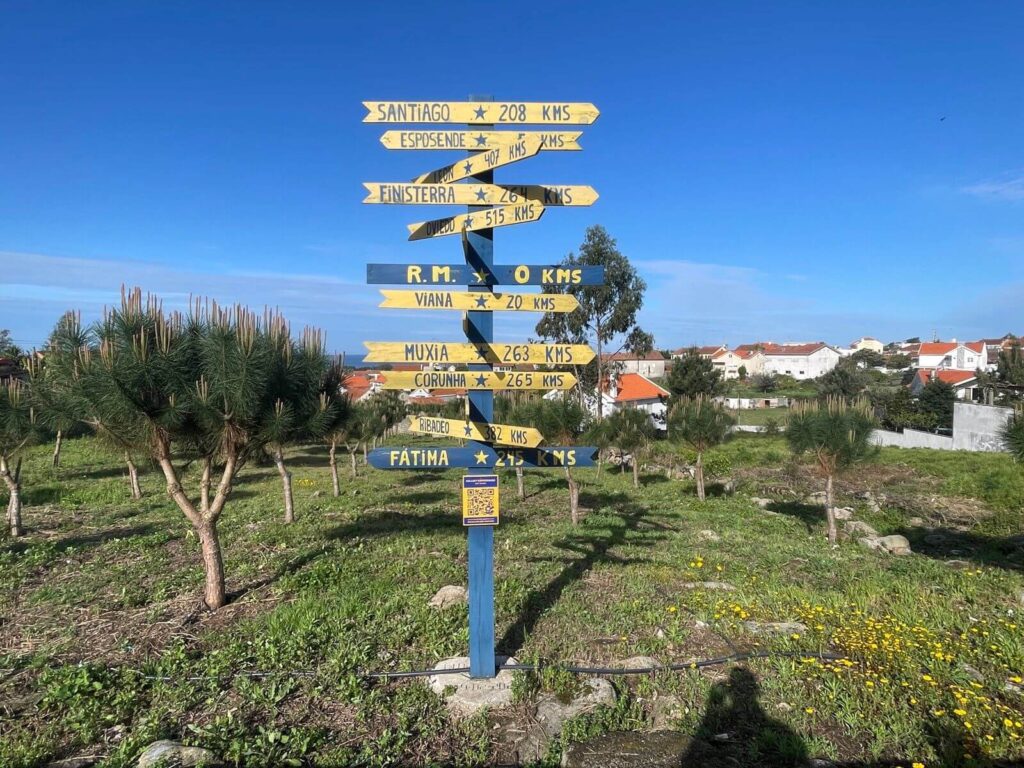
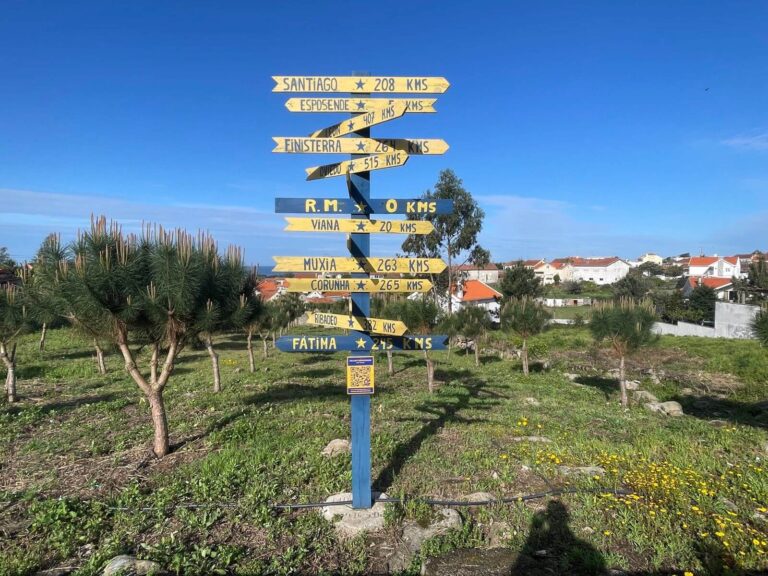
camino sign post Esposende To Viana Do Castelo 2-Coastal Route 
Sheep gathering near a fence along the Coastal Route of the Camino Portuguese 
Image of Saint James made with painted tiles along the Camino Portuguese 
Statue of Saint James along the Coastal Way on the Portuguese Camino de Santiago 
Old distance marker with the scallop shell and the sword of Santiago along the Camino Portuguese 
Pilgrim memento along the Camino Portuguese 
Pilgrim walking on a forest trail on the Coastal Route of the Camino Portuguese 
The Ponte do Sebastião on the Coastal Route of the Camino Portuguese 
Forest trail on the Camino Portuguese with a pilgrim walking in the distance 
A statue of Saint James decorated with flowers before Easter 
Casa de Albinío, a pilgrim stand along the Coastal Route of the Camino Portugués 
Igreja e Mosteiro de São Romão do Neiva along the Coastal Route of the Camino Portugués 
Lemon tree next to the Portuguese Way 
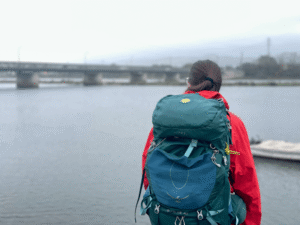
Pilgrim climbing a slope on the Camino Portugués 
The Ponte Eiffel into Viana do Castelo on the Camino Portuguese
Map
For the Esposende-Viana do Castelo stage, we started our map at the tourism office in Esposende. The Coastal Route passes through here, so all they have to do is simply continue walking.
In Viana do Castelo, we ended our map once again at the tourism office. Although it’s not technically on the Camino, it’s only a block away and very close to some of the best restaurants in town!
Distance and Elevation*
Distance: 26.3 km / 16.34 miles
Elevation gained: 503 meters / 1,650.26 feet
Elevation lost: 499 meters / 1,637.80 feet
*Distances are estimates. Learn why on our methodology page.
Amenities
At the start of today’s stage, you’ll find everything you need. Like Viana do Castelo, Esposende has several supermarkets and plenty of restaurants and cafes where you can have breakfast or coffee.
Likewise, Viana do Castelo is a mid-sized town that is popular with both pilgrims and local and international tourists. Besides the many supermarkets, you’ll also find that restaurants offer a more varied cuisine.
We loved the fresh pastries, good coffee, and cheap groceries at the Abilio Cardoso supermarket just after you pass the beautiful São Miguel church in Marinhas. This little market is a great place to stock up for the day. Furthermore, its location lets you leave Esposende before the local shops open!
The amazing Lampião Café just off the Rua Padre Almeida in Belinho is a must-stop. Prepare for a serious collection of Che Guevara memorabilia and souvenirs from around the world. The incredibly friendly owner is generous with snacks and will probably send you off with a glass of port and a hearty ‘Buen Camino!’.
Finally, in the town of Chafé (about 17 km), you can find the Café São Sebastião. This no-nonsense bakery offers delicious baked goods and hot or cold drinks. This is a popular stop, so you’ll see plenty of other pilgrims resting here for a short while.
Between the towns, however, amenities are scarce and you won’t find water fountains like on other Caminos. Although you walk from town to town, the stretches of forest can make them feel further apart than on previous stages. Make sure to bring plenty of water when walking in hot weather.

What’s In Store
Today’s stage has a little of the best and the worst that the Portuguese Coastal Route has to offer. Today you’ll get some of the best forest walking, the smell of Eucalyptus trees, and stunning coastal landscapes. Unfortunately, you’ll also get loads of cobblestones.
As you make your way from Esposende to Viana do Castelo, you’ll come across the first churches dedicated to Saint James (São Tiago in Portuguese). Although his presence in Portugal is not as strong as it is in Spain, you can really tell from the number of statues and shrines that you’re getting closer.
While the first part of the day is pretty flat, there are two steep climbs in this stage. You only gain about 100 meters in altitude for each climb, but they can feel strenuous if you’re not used to it.
Morning: Belinho and the River Neiva
After leaving Esposende, the Camino goes inland. Both Esposende and Marinhas have places that serve coffee, which makes the start of the day feel nice and relaxed. Once you leave town, turn right at the chapel onto Rua da Ponte Nova.
When the Rua da Estrada Velha turns into the Rua Estrada Real, the smell of Eucalyptus trees fills the air. The landscape for the first 10 kilometers of the day mainly consists of the familiar back roads, but you’ll start seeing more and more trees pretty quickly.
Besides the beautiful church (I loved the ceiling inside!), the town of Belinho also has the small Capela de Santo Amaro. This cute chapel has a nice area with benches as well as a cool pilgrim stamp available. Although the relentless cobblestones seem like they go on forever, rest assured that they’re about to end.
Even better, one of the most beautiful sections of the Portuguese Camino is waiting for you! The rest of the morning is spent in gorgeous forests that slowly descend to the river Neiva. Following the river, you walk through cool, lush and fragrant forests that provide some welcome shade.
Finally, you cross the Neiva River on a cute little bridge that roughly marks the halfway point of the day. Be careful when crossing the river because the granite slabs can get slippery on rainy days.
Afternoon: The Climb to Castelo do Neiva and Forests
Although several yellow arrows are pointing right after the bridge, don’t be confused when you see pilgrims turning left. The Senda Litoral also crosses this bridge. While most pilgrims who walk the Coastal Route will follow the arrows, some are on a different path.
After crossing the river, the road goes up and the first climb of the day begins. While the ascent can feel challenging at times, it shouldn’t pose a problem if you’ve made it this far. Over the next few kilometers, you gain about 100 meters in altitude. While this doesn’t sound like a lot, your legs and knees will tell you otherwise!
At the top of the hill is the Igreja de Santiago de Castelo de Neiva. Built during the Middle Ages, this is the oldest church in the Iberian Peninsula (Portugal and Spain) dedicated to Saint James. Inside, the 9th-century inscription is a must-see for anyone interested in the history of the Camino.

Continue straight for a few kilometres until you see the haunting ruins of the Mosteiro de São Romão de Neiva. With a picnic table and an empty parking lot, this makes for a nice break before the second climb.
Fortunately, the second hill between the towns of Anha and Darque is less steep. The town of Anha has a nice resting area in between a church and a small chapel. You can find a bar, Tasca do Luís, a little further down the road.
It won’t be long before you can see the outskirts of Viana do Castelo. After a long day, the sight of the famous Eiffel Bridge across the River Lima is a welcome sight. Your feet will be aching after a day of walking on cobblestones! It’s OK to be tired; you’re almost there.
Forest Walking on the Trail
Many pilgrims list the wooded sections on this stage as one of the highlights of their Camino. In terms of natural beauty, the views of the River Neiva definitely make for a stunning walk.
On rainy days, however, the rocky terrain becomes slippery, and you’ll want to go slowly here. The uneven dirt paths and moss-covered rocky surfaces can be tricky when wet.
While you don’t really need fancy footwear for most of the Camino in Portugal, this section is different. On wet days, consider wearing good shoes and using your hiking poles for this stage.
Arriving in Viana do Castelo
The walk into Viana do Castelo offers spectacular views of the Atlantic Ocean on one side and the Lima River on the other. Be careful when crossing the main road in Viana do Castelo. The bridge is a very busy road, so avoid crossing it unless there are pedestrian crossings!
The coastal town of Viana do Castelo is a highlight of the Portuguese section of this Camino Route. With plenty of noteworthy architectural sights and national monuments, the historic centre is worth exploring. This is also where you can find most supermarkets and restaurants.
Around the Praça da República, the old town hall and the Romanesque-style cathedral are worth checking out and I also really enjoyed the stroll along the Lima river. History buffs will like the Roman amphitheater near the entrance of town and the Iron-Age ruins on top of Mount Santa Luzía.
Historic Fact: When you walk into town, it’s hard to miss the ships and the fishing port. Did you know that the fishing industry goes back to the 16th century? Fishing boats used to sail as far north as Greenland to find fresh cod!
Mount Santa Luzía and the Church
Located high above the town, the imposing Sanctuary of the Sacred Heart of Jesus dominates the skyline of Viana do Castelo. The church can be seen from Esposende on a clear day, and you may have even caught a glimpse of it on yesterday’s stage.
Getting to the church involves a rather steep climb up the mountain that may be too much after a long day on the trail. Fortunately, you can skip the climb by taking the Elevador de Santa Luzia. The funicular is €3 for a round trip and stops running after 6 pm, so make sure you keep an eye on the clock!
In addition to the beautiful church and the excellent pilgrim hostel, going up to Santa Luzía offers amazing coastal views and possibly the best sunsets on the entire Coastal Route.
Just behind the famous church are the ancient ruins of Citânia de Santa Luzia. The remains of this settlement go back to Roman Times and offer a fascinating glimpse into the ancient days of Viana do Castelo.
Accommodation Options in Viana do Castelo
As a bit of a tourist city, Viana do Castelo offers several excellent accommodation options and has something for every budget.
The Hostel de Santa Luzía is an excellent albergue on top of the mountain. In this unique location with amazing views, pilgrims have access to a kitchen and a washing machine. Keep in mind that the funicular only starts running at 9 am, so early risers beware!
In the center of town, you can find the Albergue de Peregrinos Sao Joao dos Caminhos, a simple albergue run by the Carmelite monks. This is a humble place that offers a small kitchen as well as a place to (hand)wash and dry clothing.
If you feel you need to recover from a long day with a bit of luxury, then consider the amazing Hotel do Parque. This hotel is right next to the Eiffel Bridge and has comfortable rooms and even a pool. Dipping your feet in the fresh water feels amazing after a long day’s walk!
Extending or Shortening the Stage
While Esposende to Viana do Castelo is a long stage, the next day will be even longer! It’s not surprising that some pilgrims choose not to follow the standard itinerary.
On your way to Viana do Castelo, you’ll pass through several towns that offer options for pilgrims looking for a shorter (or longer) stage.
Shorter Stage: Anha
If you loved the bar Tasca do Luís in Anha, you can call it a day here. In this small town, you can find excellent pilgrim accommodation options as well as cafes and even a supermarket.
The cozy Casa da Carolina is a popular choice if you’re looking to cut the day a little short. With its well-equipped kitchen and comfy beds, this place is a no-brainer if you’re looking to stay here. It even comes with a little pool to soak your feet in!
Staying here saves you about 5 kilometers and the second climb of this stage!
Shorter Stage: Chafé
While many pilgrims love stopping for a ‘café in Chafé’, this town is also a great stopover on the Camino. The lovely Casa da Reina is a great stay when your feet start telling you it’s been enough for today.
Although Chafé isn’t on the same level as Anha in terms of amenities, it does have several cafes and a bakery.
Stopping at Chafé shortens this stage by about 10 kilometers. There are direct buses to Viana do Castelo available to pilgrims who wish to take a rest day. Buses leave from the N13 and bus tickets can be bought from the driver for just a few euros.
Longer Stage: Areosa
Although the next is a very nice walk, it’s also pretty long. Putting in a few extra kilometres today will make for a better experience tomorrow!
About 5 kilometers after Viana do Castelo is the small town of Areosa. Although it only has a few accommodations, it’s a great candidate for spending the night. The slightly pricey yet charming Quinta da Boa Viagem is perfectly located near the Camino and offers comfortable rooms and a nice breakfast.
¡Buen Camino!
As you get closer to Spain, you’ll find more and more signs that hint at the presence of Saint James. For now, enjoy the last stages of the journey on the Portuguese Coastal Way!
¡Buen Camino!